Generative Design. A swimmer in a natural sea frame
Celestino Soddu
Politecnico di Milano University.
Celestino.soddu@polimi.it website:
www.soddu.it
Abstract
Generative Design is a logical synthesis of a creative
process using transformation rules (algorithms). It can be realized designing a
program able to simulate this process and to generate outputs as 3dmodels of
architecture, cities, objects. As all creative processes it involves
subjectivity in the definition of how the process runs and how the transforming
rules are created and organized into a system.
As in all creative processes two main factors are involved:
the unpredictability of external factors linked to each design occasion, like
the environmental context and client’s requests, and the subjectivity of
designers when they interpret these external factors.
Being a logical synthesis of this complex dynamical system,
Generative Approach can be successful used in teaching architectural design as
subjectivity-oriented approach.
Morphogenetic
Meta-Project versus Project
Generative Design could be represented like a morphogenetic
meta-project, an organized idea of “how to run” a design process. In sixties of
last century meta-projects were the structure of organization of incoming
projects. They were constructed with the aim of identifying the best structure
to answer to “objective” functional needs. It was not possible to full develop
this kind of approach because functional needs, extended to practice functions
but also to symbolic and aesthetical functions, are strongly related to the
subjectivity of customers and to the subjectivity of designers.
Generative Design is a meta-project with two fundamental
extension:
1. it involves subjectivities going more in deep into
complexity of (architectural, town environment, industrial objects…) designed
artificial systems.
Perspective versus
Axonometric
It’s like moving from axonometric to perspective view. Adding subjectivity you can move from the
axonometric representation, “objective” because free from subjective views but
limited by the dimension of the sheet, to the perspective view that, using
subjective points of view, can represent the infinite in one sheet and,
following that, the increasing complexity of represented systems.
2. it can run the design process a lot of times, being
sensible to little variations of inputs (similar to the different feel of the
designer in different moments) and it can generate a sequence of endless
results, all different but all related to the designer idea.
Anamorphic versus
Axiomatic
It’s like moving from
normal perspectives view into anamorphic perspective views. Each different
point of view transform the anamorphic representation into unpredictable
scenarios. Looking at each of these outputs we can discover one of the possible
representation of the idea.
Process versus Output
Generative Design, as subjective operative meta-project, can
be used to design a kind of artificial objects, an artificial DNA of a species
of objects because is oriented to set up a process and not only to reach one
result. More, it defines and renders explicit all the steps of a “normal”
design process, from the first sketch to the final executive project. And, in
this way, it’s a wonderful support for teaching (architectural and industrial)
design.
Idea versus Solution
If you are a designer and someone ask you: “which is your
idea, which kind of forms are you thinking to” or “which character do you love
for your architectures” or “ which kind of impact do you prefer to have when
you enter in a unknown city”, you can explain it using words but you cannot
show it if not using a generative approach because it represents an idea and
not peculiar solution of problems. Each idea can be developed with multiple
solution but each solution is not exhaustive of the idea.
Synthesis versus Simplification
Interpretation versus Analysis
The reason is that you cannot use drawings, forms or images
able to explain your thought in an exhaustive way because you have to perform a
synthesis of all your beloved forms, including possible unknown forms that
could fit your needs. You cannot simplify.
More, answering to all these questions, you have to explain
the complex system of relationships and possible interfaces that a town
environment must have for linking your needs and your interpretation of
unpredictable user’s needs.
Generative design is not an analytical process but a
synthesis process. The core of each generative project is the synthesis, using
algorithms, of own subjective approach to context and to own subjective
cultural, technological and functional references. In brief, generative design
performs own modus of approaching the transformation of existent worlds into
possible environments more closed to own idea of quality.
Following that, In generative design processes, but also in
all creative processes, the subjective interpretations of existing world are
the main creative acts.
Subjectivity versus
Objectivity
Imitation versus Copy
The role of subjectivity is really important in design
activity. Without subjectivity we loose the main stimulus for evolving our
functional scheme into a project, and we lose the possibility to use our
cultural, symbolical, aesthetical, technological references because these
references can be used only if we have our interpretation of them. If not we
can do only copies.
Variations versus
Optimisation
In last century we experienced a design approach focused on
optimisation. It came by the need to identify “the best” and realize it with
industrial assemblage chains. This approach belongs to the concept that all
people are equal, all people need the same equal product. This approach is not
more accepted and it’s known that we can realize a product with the best
performances but with different form. These differences fit the need of
personalization of products, fit the need of customers to find his own product,
fit the need of each person to find out a product, a house, a car, a square, a
city, an environment that fit his needs and that is the mirror of his identity
and uniqueness. The subjectivity of designers fit the subjectivity of customers.
The possibility to manage variations is inside the quality
of a design process. Generative
projects face directly this need generating unpredictable, but recognizable
outputs.
Identification versus
Homologation
Because the recognizability of outputs is the explication of
the architect’s (or artist’s) imprinting. But it’s also a function that each
customer appreciates when looking for something facing his own subjectivity. We
can recognize a print of Piranesi, also
if we never have seen it before, because we recognize the style or, we can say,
the DNA of his drawing process, his stratified interpretations of surrounding
environment that makes unique his drawings.
Recognisable versus
Anonymous
In the some way we need to identify our home when we go home,
to identify our city and to love the link between its unique character and our
way to look at the future.
Generation versus
Cloning
Generative Design realize a species and not only single
outputs. It’s like in Nature. Generation is strongly different from cloning,
like art craft is different from assemblage chain. But now an industrial
production of all different objects is technically possible using the existing
industrial equipment and generative projects. More, variations, as in nature,
enhance the recognizability and peculiarity of each idea facing, in the
meantime, the need of personalization of each customer. In this era, when
someone tries to clone, like in the last century industries, the natural
events, we like to rediscover, in the artificial world, the uniqueness of
generation, like in Nature.
Unpredictability
versus Repetition
The unpredictability of variations of natural objects, like
a rose or a cat, enhance the rose and cat concept, the identity of these
species, like the unpredictability of a each variation of Bach enhance the
identity of his music and our ability to identify and appreciate it. On the
contrary, repetition destroys identity. A compound of all equal houses has less identity (and is less fascinating)
of a compound where all the houses are different but each one follows a
recognizable common idea of quality.
Variations as mirror of the subjectivity of each inhabitant.
Random of requests
versus Random of outputs
The use of random factors is important in constructing this
process as software. It follows two different approaches. Random as possibility
to create unpredictable requests, constrains, needs as occasions to improve the
complexity of the process and testing the recognizability of the idea in all
generated events, or random as generator of casual forms. The difference is,
substantially, the recognizability of the artist/architect/designer imprinting.
Teaching How versus
Teaching What
I am teaching architectural design from 30 years and, after
having developed my first generative software in 1987 and published the related
book in 1989 (C.Soddu, Citta’ Aleatorie
(Random Cities), Masson Publisher), It was me clear that, as my Argenia
Generative Software worked simulating the design processes and generating
architectural outputs able to fit different occasions and client’s needs, so I
would have been able to use Argenia as model for investigating about designing
process. It is, in fact, an effective logical synthesis of normal design
processes.
So I used it as base of an operative and effective teaching
structure for Design Studio Labs in architecture, environmental and industrial
design.
Outputs of students were soon really encouraging because
based on discussions about “how” develop their work and not about “what” they are
designing, giving tools for managing their work without discussing about their
partial and temporary results but looking at them as a first step of a
transforming process. This teaching approach enhanced their subjectivity and
the possibility to use at the best their own cultural references. In other
words they succeed in using all their previous learning work by interpreting
these references as transforming codes. But this aspect created also some
difficulties. We can synthesize these difficulties as belonging to the
student’s denial to render explicit his subjectivity, his cultural peculiarity,
also if only in the field of design approach. The common request of some
students (but only in the first steps of the learning path) was the request of
a more “objective” teaching process were each student can work “analytically”
for reaching a surely acceptable result. But design process is not an
analytical process. If teacher don’t talk about subjective approach (as done by
design teaching in the last century for ideological problems) he misses the
possibility to enter in deep into discussion on design processes.
It was also difficult to clear to the students that the
assessment of their projects developed in the Design Studio Labs is done
valuating:
1. the congruence between the aims indicated by each student
at the beginning of their work and the structure of the transforming rules that
they designed during this experience.
2. the progressive transformation path in terms of
increasing-complexity difference between the initial sketch and the final
drawings.
3. The possibility to manage again, in different design
occasions, the same reached quality. This point is the main point because it
demonstrates the increasing professionalism of the student.
Teaching structure. A
subjective oriented design approach for teaching design.
Transforming versus
Forming
The steps for running a generative approach in teaching
design are:
1. Each student is required to identify the character of his idea by
interpreting his references into transforming rules. First the student can list
a sequence of characters using words, like adjectives. Each student is required
to identify 3 adjectives for describing his design aim. (3 and not less or more
because it’s interesting to make synthesis and to be not too much axiomatic.
The choice of three adjective was used, the first time, by E,Colabella that
experienced in her courses the same logical process). Students have to identify
some references as representation of each character.
2. Second step is identifying the different design moments,
when the designer have to choose how to fit the incoming functional,
aesthetical and symbolical requests. These moments can be identified like:
How to fold an element
How to divide an element into different parts
How the element ends
How the element lean on
How make holes into elements
How …
3. the third step is the more creative one and each student
is required to explain and use his design subjectivity. Each personal reference can be interpreted
as transforming rule applied to each different design moment. The request is:
how I can transform the previous step of my project into an incoming one
fitting a concrete request and reaching, in the meantime, the identified
character? For example, if the student have to open a door into a wall, to
divide a wall into parts, to shape how his building can end, and so on, how he
will manage these incoming transformations using his own references? He will
identify previously a sequence of transforming rules that could be applied to
the project in progress for fitting different requests. The result of this
creative work is a set of rules that could be considered like designer’s
subjective DNA. The reference to DNA is correct because these rules, when used,
bring the project to be transformed in progress fitting two main questions: the
increasing functionality of the project referring to the client’s requests and
the increasing identity and recognizability of the project by fitting the
characters representing the designer’s imprinting.
4. the subsequent step, that is the fist one directly linked
to the starting a particular project, is to set up a paradigm of organization
able to support the transforming path increasing its peculiarity and its
functionality. The main difficulty regarding this stap is to design an open
system, really adaptive but, in the same time, really characterised.
5. Now we have the two engines: the paradigm of organization
and the set of transforming rules. It’s time to run the generative process
using the rules in front of each incoming request, This action will generate a
scenario. That is only one of the possible results. This work is exactly the
same of normal design activity. But the structure is really clear: these
scenarios are generated using predefined transforming rules (focused on defined
characters) into a peculiar field of relations designed for representing the
project functions. The interesting question is that this design path is clear
and understandable by each student that can open a discussion with the teacher
referring to his peculiar interest and references. Also if the students, as
normally happens, don’t use a software to manage this path but run the process
with “normal” tools.
6. The last moment is the possibility to generate variations.
Using the defined rules in different moments of the evolving design history,
each student discovers that he can reach his own aim with different results.
More, students discover that variations are a good representation of their idea
that cannot be represented by only one result. And they discover that they can
manage the reached quality of their project also in other incoming projects,
because the transforming rules that they have designed are useful to be used
again reaching the same character and imprinting. They have discovered how to
manage their professional identity and recognizability when managing their
incoming projects.
7. In practice, each student have done his subjective
meta-project that represent his identity as architect.
Using this approach, finally, teachers and students can
discuss about design process, about how each designer can go ahead with his
ideas, following his specific means, needs and aims and not only discussing on
the (final) output.
Layering versus
Permutation
One of the interesting quality of generative approach is
that students learn how to manage the complexity using layering of different
transforming rules. As it’s known, complexity cannot be reached in only one
step. The quality of architectures and cities spring up from history, from the
personal history of a design path when the designer fill the project with
different feelings of different moments (the more interesting example is that
architects, when they need to go ahead with a project that don’t seems to grow,
turn the drawings to the opposite site for having a different view of their
work, for finding out a unpredictable point of view) and, regarding cities,
from the history of different cultural moments.
More, the generative approach using transformations instead
of solutions give a further possibility: a good work for a team of different
people with different field of interest. If each partner of a design team gives
his contribution with a solution, it’s really difficult to put together all the
contributions into a final output. Forms/solutions cannot be stratified but
only permutated. But if each partner gives his contribution with a transforming
rule it’s easy to run, one after the other, each rule. At the end each partner
will find, in the final result, the representation and attainment of his own
idea.
This teaching approach was experienced by around two
thousands of students of Politecnico di Milano, Faculty of Architecture,
Industrial Design and Engineering in the courses held by me and by Enrica
Colabella starting from 1989. In 1992 E.Colabella and me wrote the book “ Il
progetto ambientale di morfogenesi” (the Morphogenetic Environmental Project)
published by Esculapio Progetto-Leonardo Editor, Bologna, explaining this
teaching approach. In the meantime more then one hundred of master thesis with
my and E.C. supervision were made using this approach. All the student’s
experience were, staring from 1995, posted in the website www.generativedesign.com.
The main results, as confirmed by students that are now
running their professional activity, are:
1. they are facilitated to increase in progress the quality
of their projects because they know how to reach, in each subsequent project,
the quality already reached in the previous ones.
2. they succeed in realizing their projects in less time,
because they use the experienced transforming codes. In this way they can find
time for increasing their transforming rules taking advantage from the peculiar
requests of each project.
Philosophy versus
technology
The generative design approach is not a technology but a
philosophy. It identifies a particular approach to understand, design and
manage the incoming complexity of artificial systems, cities, architectures,
environment, objects. It can be easily transformed in technological tools
because it uses transforming rules that can be easily written in algorithms.
Rules versus Forms
Organizing versus
Choosing
The creativity is focused on logical processes and not on
results, on organizing the system and not on choosing solutions. Choosing the
emergent event using random forms could bring to shape a good result but, in
this case, the quality is not repeatable.
Impervious versus Flat
Occasion versus Obstacle
The client requests, the constrains, the difficulties of a
project are welcome. Each new request open the possibility to increase the
final quality. Complexity is considered as the ability to answer to the
different, sometimes contradictory, unpredictable needs of users.
Organic versus
Minimalist
The design process is similar to processes in Nature. It
uses something like artificial DNA performed like a set of transformation
rules. The aim is a natural organic architecture able to answer to
unpredictable requests through complexity, as natural events. On the opposite
side we could find minimalism if we
consider it as an attempt to fit different needs with something that
looks like an optimisation.
The design approach is focused on transforming and not on forming. This
approach is considered related to the
real approach experienced by designers. The generative philosophy of design can
be synthesized by:
Proportions versus Grids
Dynamic versus Static
Parameter versus
Measure
The design approach focused on transforming and not on
forming have a long history in Renaissance. The attention, experienced in the
past industrial era, to modules and to grids change into a new, but
traditional, attention to proportions and parametric definitions because they
are more closed to the management of dynamical evolutions. Modules and fixed
measures are not more useful for managing the industrial production that uses
numerical control equipments and robots.
Permeable versus
Waterproof
Improving versus
Substituting
Facilitation versus
Hindering
And versus Or
Transformed versus
New
Memory versus Lost
Palpable versus Untouchable
Contaminate versus Pure
Perfectible versus
Perfect
The quality of a design process can be valuated through
complexity, that is not complication but synthesis of different and
contradictory abilities. This complexity can be reached through layering of
different inputs, needs, references, feelings. And the project in progress have
to be read, to be improved, transformed, contaminated without loosing his
character and identity. But enlarging its own memory. This is possible only if
the identity is managed by the modus of running the process and not by the used
forms.
Works of my students at their Master Thesis (www.generativedesign.com):
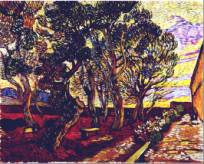
Interpretation of a tree from Van Gogh and generation of 3D
trees. Emilio Molinaro 1996

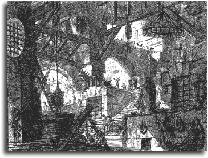
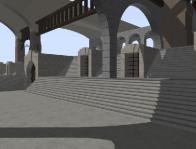
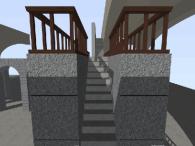
Interpretation of “Le Carceri” by GB Piranesi and
construction of subjective 3D model. Enrico Mazzei 1996
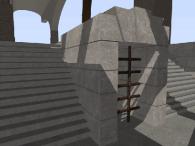
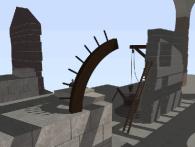
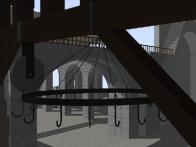
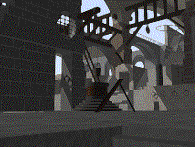
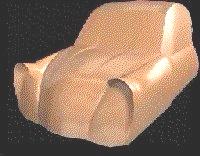
Transformation of 3D car models following identified codes.
Luigi Martinetti 1997
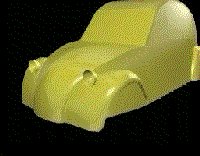
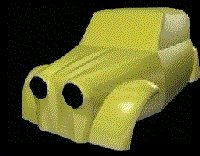

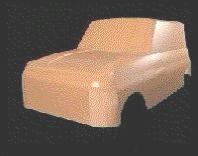
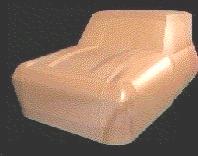
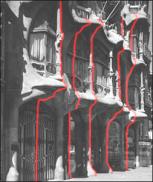
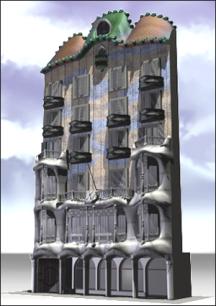
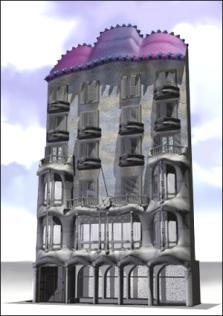
Interpretation of sections and geometries and design of
Gaudi’ codes for generating endless “Gaudi’” buildings. Matteo Codignola 2000.
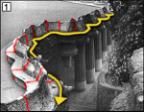
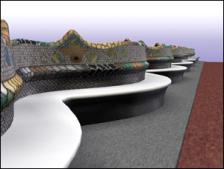
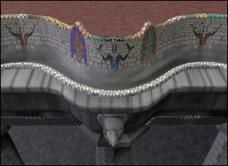
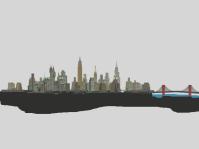
Construction of generative transformation rules of Manhattan
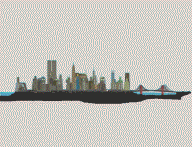
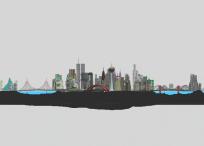
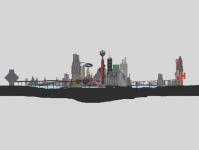
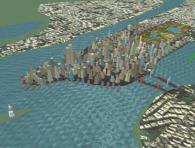
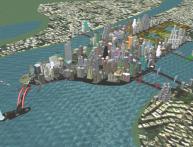
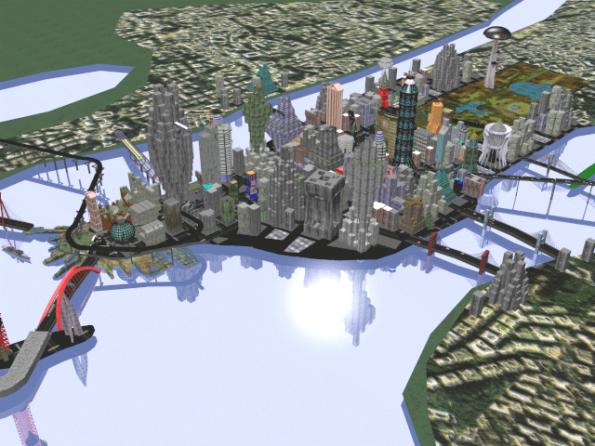
identity. Four steps of evolution. Mariateresa Capodici, Marco Melino 1996
References
(for more references www.soddu.it)
Books:
C.Soddu, ‘L’immagine non euclidea’
(the not Euclidean image), Gangemi publisher, 1987
C.Soddu, ‘Citta’ Aleatorie’,
(unpredictable cities), Masson Publisher. 1989
E.Colabella, C.Soddu, ‘Il progetto ambientale di
morfogenesi’, (the environmental design of morphogenesis), Progetto Leonardo
Publisher 1992
C. Soddu,
“Milan, Visionary Variations”, Gangemi publisher, Rome 2005
Articles:
C.Soddu, ‘Simulation tools for the
learning approach to dynamic evolution of town shape, architecture and
industrial design’, in ‘Proceedings. International Conference on computer aided
learning”, published by Press Polytecniques et Universitaries Romandes. Lausanne 1991.
C. Soddu,
"From Forming to Transforming", proceedings of Generative Art
Conference, Milan, Alea Design Publisher, December 2000
C.Soddu, “Recognizability of the idea: the evolutionary
process of Argenia” in P.Bentley & D. Corne (edited by), "Creative
Evolutionary Systems", Morgan Kaufmann Publisher, San Francisco US, 2001
C.Soddu, “New Naturality: a Generative approach to Art and
Design”, Leonardo Magazine 35, MIT press, July 2002
C. Soddu, "Generative Design / Visionary Variations -
Morphogenetic processes for Complex Future Identities" in the book Organic
Aesthetics and generative methods in Architectural design" edited by P.
Van Looke & Y. Joye in Communication&Cognition, Vol 36, Number 3/4,
Ghent, Belgium 2004
C.Soddu, E.Colabella, "A Univesal Mother Tongue",
Leonardo Electronic Almanac Vol.13,
Number 8, August 2005
Websites: